

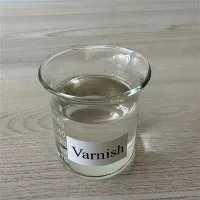
Water Based UV Varnish
Haining Dishenguo New Material Technology Co., Ltd.. Is an international trade enterprise combined with factory, relying on Jiangnan University of science and technology,which is one of the Chinese photographic .

01
Advanced Equipment
Our company has the equipments which can produce one thousand tons of uv coating, water-based environmental protection coating each year, has advanced product quality testing equipment, perfect production management system, and comprehensive after-sales service.
02
Products Sell Well
Our products mainly exported to India,Vietnam , the Middle East, Russia, Indonesia, Africa, Mexico, and many other countries and regions.Most of our cooperative customers are important local PVC decorative material manufacturers.
03
Wide Range of Applications
Our products is often used in high-end printing, packaging and publishing industries, and can significantly improve the gloss, wear resistance and water resistance of the paper surface.
04
Quick Response
Our commitment is to respond to your inquiries within 24 hours, ensuring that you receive the information and support you require in a timely manner.


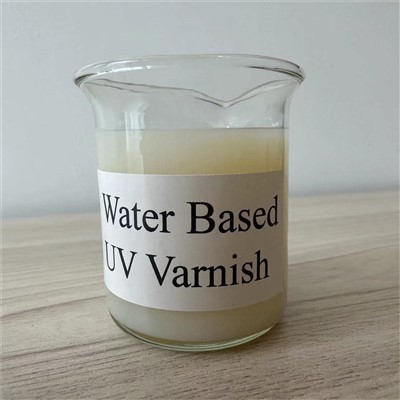


Advantages of Water Based UV Varnish
Eco-friendly and Low Odor
Water-based varnishes are a more environmentally friendly option due to their lower content of volatile organic compounds (VOCs). Additionally, their low odor makes them more comfortable to apply and use.
Quick Drying
One of the main advantages of water-based varnishes is their quick drying time. This allows for multiple coats to be applied in less time, speeding up the process of protecting and beautifying the wood.
Easy Cleaning
Tools used to apply water-based varnishes can be easily cleaned with water and soap, making maintenance easier and reducing the need for specific cleaning products.
Durability and Resistance
Despite being water-based, these varnishes provide long-lasting protection against moisture and UV rays, keeping the wood in excellent condition for longer.
Types of Water Based UV Varnish
Printing Varnish
Printing varnish is a type of transparent ink varnish which can give either a gloss or matte finish. Gloss results in a smooth, glassy surface while matte lends a softer, satin sheen.
UV Coating
As with printing varnish, UV coatings are glossy in the resulting finish. As light cures the coating rather than heat, it dries faster than standard varnishes and results in a more resilient surface.
Aqueous Coating
It can give a gloss or a matte result. However, it needs to be applied using separate coating machines rather than on the printing press. Coating machines have a slower run speed than the offset machines, which results in a thicker coating than other varnishes.
Press Varnish
Press varnishing is a two-stage process. The first stage is the application of the varnishing using the aqueous coating machine. In the second stage, while the varnish is still wet, the sheets are transferred to another machine to be pressed. Pressing and drying results in a high-gloss finish.
Tips for Using Water Based UV Varnish


Raise the Grain First
Always raise the grain on raw wood before applying a water-based finish. Simply brush, sponge or spray on some distilled water and let it dry thoroughly (overnight is best). Then, resand with your final grit paper to break off the whiskers. Now when you apply the finish, the grain will stay down.
Seal Oil-Based Stain
Oil and water don't mix. Water-based poly can have adhesion problems when applied over an oil-based stain that's not thoroughly cured. That's why you should always apply a barrier coat of dewaxed shellac to seal oil-based stain. After the shellac dries, a light scuff-sand will leave an excellent surface for the poly to grip.
Lay it Down and Leave It
Water-based poly should be laid down with a couple of quick strokes. Don't worry too much about the appearance of the wet finish. It will look awful at first, but water-based poly has an amazing ability to pull tight as it cures, like shrink wrap.
Choose the Right Applicator
Buy a top-quality, fine-bristle nylon brush for spindle work, inside corners and narrow edges. The nylon bristles won't absorb water from the finish and become mushy like natural bristles will.
Use Synthetic Abrasives, Not Steel Wool
Synthetic wool is a must-have product with water-based finishes. Traditional steel wool will leave behind bits of steel, which will react with the water and leave rust stains in the clear coat. Synthetic wool comes in various grades and is readily available where water-based finishes are sold.
Refinish Kitchen Cabinets With Water-Based Poly
The low odor of water-based poly makes it an ideal choice for refinishing your existing kitchen cabinets in place. It doesn't matter what the old finish was, as long as you prep the surface properly before applying the water-based product.
Strain Your Poly First
Unless you're using a brand new can of poly, always strain it with a medium-mesh strainer before applying it. Once the finish is used, it will be polluted with little bits of dried or semi-dried varnish, which will wreck your new finish.