

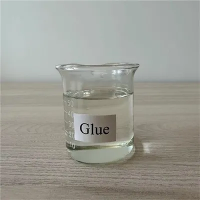
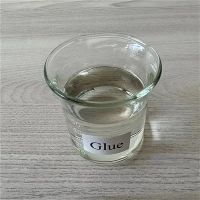
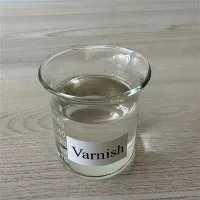
UV Curable Adhesive
Providing A Variety Of High-Quality Adhesives


Advantages of UV Curable Adhesive
Environmentally Friendly
Using UV radiation for curing adhesives, inks, glues and bonds gives tremendous advantages to manufacturers, OEM's large and small. UV curing is obviously better for the environment than using solvents.
Provides a Consistent High Quality Process
UV treatment provides a consistent process with instant drying minimizing shrinkage of the original application, resulting in a high gloss durable coating, in seconds.
Higher Profits with Increased Efficiency
Use a UV treatment system will yield many financial benefits with less scrap, reduced time, less work in process, and faster curing times.
Conducting a simple value stream mapping analysis will reveal a reduction in energy use, pollutants, waste, labor, and time. Improving cycle times is one of the most financially advantageous practices for manufacturers.
Versatility
UV adhesive offers high compatibility with different substrate: metal, glass, plastic, ceramic or composite.
Minimal VOCs
UV curable adhesive does not require solvents or other chemicals for curing, reducing the emission of volatile organic compounds (VOCs) and minimizing environmental impact. This instant drying process also minimizes shrinkage of adhesive, especially compared to conventional curing technique.
Optical Clarity
UV adhesive provides a high optical clarity thanks to unique composition and the photopolymerization can occur without the introduction of volatiles or by-products that could cloud or compromise the adhesive's clarity.
Specifications of UV Curable Adhesive

Physical Properties
Processing and physical properties include gap fill, the spacing or gap between the substrate and adhesive or sealant; and viscosity, a measurement of a fluid's resistance to flow.
Cure time is another important property to consider. With UV curing adhesives, setting or curing time is the time required for fully curing or setting a bond system. In thermosetting, hydraulically or other chemically-setting systems, the time will vary depending on the actual curing temperature. In UV curing adhesives, however, cure time can be quite rapid.
Thermal Properties
Use temperature - The range of temperatures to which products can be exposed without the degradation of structural or other required end-use properties.
Thermal conductivity - The linear heat transfer per unit area through a material for a given applied temperature gradient.
Coefficient of thermal expansion (CTE) - The amount of linear expansion or shrinkage that occurs in UV curing adhesives with a change in temperature.
Electrical & Optical Properties
Dielectric strength - The maximum voltage field that UV curing adhesives can withstand before electrical breakdown occurs.
Resistivity - The longitudinal electrical resistance (ohm-cm) of a uniform rod of unit length and unit cross-sectional area.
Dielectric constant - The relative permittivity of a material compared to a vacuum or free space.
The index of refraction - A measure of the speed of light in a material. This is the amount of light transmitted through a material.
Applications of UV Curable Adhesive
Electronics
UV adhesive curing for electronics manufacturing is an emerging application as it provides consistent stable output, no ‘hot' spots, and low heat.
Medical
UV LED technology offers many benefits to medical device adhesives such as low heat, instant on/off capability, long lifetime which makes it a versatile solution for thin film, heat sensitive or any research application.
Industrial
Industrial processes require products that can work in tough, sometimes harsh manufacturing environments. This curing includes but is not limited to solar panels, wood/plastic coatings, thin films, bottle processing, aviation, automobiles and many others.
Automotive Assembly
Light-curing adhesives are particularly effective for large volume manufacturing or assembly processes where fast curing and high quality are required.
Encapsulation of Printed Surface Boards
UV curing conformal coatings can be applied over the entire surface area of a printed surface board or in a discreet, shadowed areas to provide full protection from external environments.
Shower Doors, Handles & Cabinets
Fast and highly durable bonding between glass to acrylic, such as those within bathroom cabinets and doors, can be achieved with the use of UV curing adhesives.
Types of UV Curable Adhesive
Silicone Adhesives
Silicone adhesives are single-component, translucent paste-like adhesives that cure at room temperature to form high-performance elastomers. They exhibit excellent resistance to extreme temperatures, aging, and electrical insulation properties, and provide good adhesion to most metals and non-metal materials.
01
Polyurethane Adhesives
Polyurethane adhesives can bond various materials and maintain their physical and chemical properties even at low or extremely low temperatures. They are primarily used in the footwear, packaging, automotive, and magnetic recording material industries.
02
Acrylic Resin
Acrylic resin has good weather resistance, chemical stability, and corrosion resistance, as well as good adhesion and wear resistance. Acrylic resin is mainly used in the production of pressure-sensitive adhesives and is also applied in the textile and construction fields.
03
Hot Melt Adhesives
Hot melt adhesives can be classified into EVA hot melt adhesives, polyamide hot melt adhesives, polyester hot melt adhesives, and polyolefin hot melt adhesives, depending on the raw materials.
04
Epoxy Adhesives
Epoxy adhesives are engineering adhesives made from epoxy resin base materials, curing agents, diluents, accelerators, and fillers, they can bond metals and most non-metal materials.
05
Tips for Using UV Curable Adhesive
Use Appropriate PPE
Light-curing adhesives sometimes use light in the UV spectrum to cure. To ensure proper protection from this type of light, it's a good idea to wear gloves when handling the adhesive.
Confirm Adhesive and Application Compatibility
Not all assembly applications are compatible with light-curing adhesives. Some opaque or colored substrates will not transmit UV light, and many grades of clear plastics include additives (such as UV inhibitors) that can prevent curing.
Ensure Your Dispensing Equipment is Compatible With Light-Curing Adhesives
Consider investing in equipment with dispensing nozzles that are compatible with light-curing adhesives. All production equipment should be opaque and UV-resistant to ensure it will not create a premature cure.
Examine the Production Environment for Unwanted Light Exposure
Light from windows or overhead lamps can cause light-curing adhesives to cure prematurely. This can lead to wasted material and increased downtime. Consider using equipment that is opaque and UV-resistant. Properly seal adhesive containers to also help shut out unwanted light.
Complete Substrate Preparation
Ensure your substrate is clean and free of any dirt, oil or grease. These contaminants will interfere with the adhesive's ability to properly wet the surface.
Mitigate Shadow Exposure When Curing
The light-curing adhesive will need full exposure to light when curing for optimal results. If certain areas of the adhesive will be in shadows, manufacturers should consider a dual-cure adhesive instead.
Watch Out for Air Bubbles
Air bubbles can compromise bond strength by reducing the intended weight of adhesive for the application. To reduce the likelihood of air bubbles, lines should be flushed after refilling or replacing adhesive containers before they are completely empty.
Match the Light Wavelength to the Adhesive
Adhesives have a preferred wavelength of light at which they will cure fast and strong. While your adhesive will still bond at wavelengths that are slightly off, for best results, match the UV or LED wavelength to the photo-initiators in the adhesive.
Use Appropriate Light Intensity
The intensity of your light source can affect the speed of the adhesive's cure. A higher intensity can help reduce curing time for substrates that are difficult to transmit.