

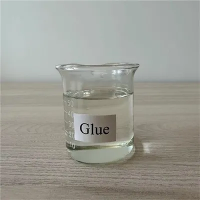
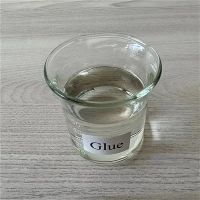
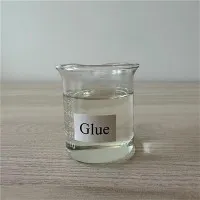
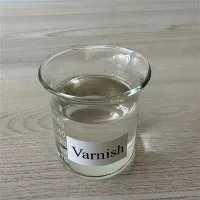
UV Cure Varnish
Haining Dishenguo New Material Technology Co., Ltd.. Is an international trade enterprise combined with factory, relying on Jiangnan University of science and technology,which is one of the Chinese photographic .

01
Advanced Equipment
Our company has the equipments which can produce one thousand tons of uv coating, water-based environmental protection coating each year, has advanced product quality testing equipment, perfect production management system, and comprehensive after-sales service.
02
Products Sell Well
Our products mainly exported to India,Vietnam , the Middle East, Russia, Indonesia, Africa, Mexico, and many other countries and regions.Most of our cooperative customers are important local PVC decorative material manufacturers.
03
Wide Range of Applications
Our products is often used in high-end printing, packaging and publishing industries, and can significantly improve the gloss, wear resistance and water resistance of the paper surface.
04
Quick Response
Our commitment is to respond to your inquiries within 24 hours, ensuring that you receive the information and support you require in a timely manner.


Advantages of UV Cure Varnish
High Hardness
The highest hardness can reach 5-6H.
Fast Curing Speed
The coating can be cured by UV light in 1 second.
Excellent Performance
Hardness, wear resistance performance indicators, acid and alkali resistance, salt spray resistance and gasoline resistance are very high. Especially its film plump and shiny.
Pollution-Free
UV varnish is recognized as a green production. UV varnish is sensitive to dust and has strict requirements on the construction environment.
Applications of UV Cure Varnish


Automotive Manufacturing - UV curable coatings are used in the manufacture of automotive components to impart a variety of properties to surfaces, including glare reduction, wear or scratch resistance, anti-fogging, microbial resistance and chemical resistance.
Furniture & Woodworking - UV coatings and finishes offer increased hardness and solvent resistance, a high-quality final product, increased in line-speed (thanks to the speed at which the curing process occurs), more floor space (thanks to shorter finishing lines) and a reduction in fire risk.
Marble & Granite - Properly sealing stone helps to protect it against everyday dirt and spills, the effects of weather and the impact of ultraviolet radiation.
Electronics - The ultra-fast cure and lower temperature enabled by UV curing is perfectly suited to electronics applications.
Flooring - UV curable topcoats are used in the manufacture of both residential and commercial vinyl and wooden flooring.
Metal Decoration - Decorative UV inks can be cured using UV lamps. These inks are suitable for metal containers, packaging, and cans.
Packaging - UV coatings is a common finishing process in packaging applications. UV coating styles include high-gloss and matte.
Paper Printing - UV ultraviolet coatings is a glossy, shiny liquid coating applied to a printed paper surface and cured on a printing press.
Components of UV Cure Varnish
UV Oligomer
The film-forming compound is the main composition of the coating, which is the fluid component in the coating. The coating film performance, construction performance and other special properties of the coating mainly depend on the film-forming compound. UV coating film-forming compound is oligomer, its performance basically determines the construction performance and light curing rate of the coating before curing, the coating film performance and other special properties after curing.
Active Diluents
Active diluents are another important component of UV coatings, which can dilute and reduce viscosity, and also have the ability to adjust the performance of the cured film. The acrylate functional monomer has high reactivity and low volatility, so it is commonly used in UV coatings.
Photoinitiator
Photoinitiator is a special catalyst in UV coatings, it is an important component of UV coatings, to determine the light curing rate of UV coatings.
Additives
Auxiliary agent is the auxiliary component of UV coating. The role of additives is to improve the processing performance of coatings, storage performance and construction performance, improve the film performance and give the film some special features, etc. UV coatings commonly used additives are defoamer, leveling agent, wetting and dispersing agent, adhesion promoter, matting agent, resist, etc., they play a different role in UV coatings.
Tips for Using UV Cure Varnish
Choose the Right Varnish
There are different types of UV varnishes, such as gloss, matte, and satin. Select the one that suits your desired finish.
01
Prepare Your Materials
You will need a soft, quality brush or a special roller designed for varnish application. You can also use a spray gun, especially for large surfaces.
02
Apply the Varnish
If using a brush, apply the UV varnish with long, even strokes, working in the direction of the grain. For a roller, apply the varnish with a gentle, steady pressure to avoid air bubbles. When using a spray gun, maintain a consistent distance from the surface and move in smooth, horizontal motions.
03
Allow to Dry
UV varnishes cure much faster than traditional varnishes. Expose the surface to UV light to speed up the drying process. This can be natural sunlight or a UV lamp. Be cautious of direct sunlight, as it may cause the varnish to dry unevenly.
04
Inspect the Finish
Once the varnish is dry, check for any areas that may require another coat. Remember that multiple thin coats will produce a better result than one thick coat.
05