

Screen UV Varnish
Haining Dishenguo New Material Technology Co., Ltd.. Is an international trade enterprise combined with factory, relying on Jiangnan University of science and technology,which is one of the Chinese photographic .

01
Advanced Equipment
Our company has the equipments which can produce one thousand tons of uv coating, water-based environmental protection coating each year, has advanced product quality testing equipment, perfect production management system, and comprehensive after-sales service.
02
Products Sell Well
Our products mainly exported to India,Vietnam , the Middle East, Russia, Indonesia, Africa, Mexico, and many other countries and regions.Most of our cooperative customers are important local PVC decorative material manufacturers.
03
Wide Range of Applications
Our products is often used in high-end printing, packaging and publishing industries, and can significantly improve the gloss, wear resistance and water resistance of the paper surface.
04
Quick Response
Our commitment is to respond to your inquiries within 24 hours, ensuring that you receive the information and support you require in a timely manner.


Advantages of Screen UV Varnish
Provide Economic
After the volatiles are dried by heat, the layer thickness of solvent inks can be reduced by as much as 30 percent. With UV inks, 100 percent of the ink deposited stays on the plastic part – nothing is flashed off. In many cases, UV inks can run at much higher speeds than conventional inks because of the curing time involved.
Operator-Friendly
UV inks generally do not need any type of additive to boost adhesion or change the characteristics of the ink. Also, because UV inks must be exposed to UV light to cure, the ink does not dry on the screen.
Environmental Friendly
The only emission that is produced by UV curing is a small amount of ozone gas of which is easily disposed.
Types of Screen UV Varnish
Conformal Coatings
Conformal coatings encapsulate circuit boards and their electronic components in order to prevent the ingress of moisture, fungus, dust and other environmental contaminants.
Epoxy Adhesives
Epoxy adhesives are chemical compounds for joining components. They require clean surfaces and are valued for their toughness and resistance to chemical and environmental damage.
Gel Elastomers
Gel elastomers are highly viscoelastic polymer gel materials that have excellent shock absorption and damping characteristics. They are available in a variety of material types and grades.
Pressure Sensitive Adhesives (PSA) and Contact Adhesives
Pressure sensitive adhesives (PSA) and contact adhesives adhere to most surfaces with very slight pressure. They are available in solvent and latex or water-based forms.
Silicone Adhesives and Sealants
Silicone adhesives and sealants have a high degree of flexibility and a very high temperature resistance (up to 600° F), but lack the strength of other epoxy or acrylic resins.
Applications of Screen UV Varnish

Fiber & Wire
Our UV LED fiber curing system offers many benefits for curing coatings on all types of fiber and wires, including optical fiber, electrical and structural wire, and threads for smart fabrics.
Wood
UV LED curing technology is utilized in the wood coatings industry for applications such as edge coating, roller coating and digital printing. UV LED technology drastically reduces energy consumption and significantly reduces work-piece surface temperature.
Automotive
UV curing has been used for years in several areas of the automotive production process. UV provides near-instant curing of functional and decorative coatings. And the lightweight materials used in today's automobiles benefit from the low temperatures enabled by UV LED technology.
Industrial
Countless manufacturing processes make use of the benefits of UV LED curing. Applications range from manual curing of the adhesives used during sub-component assembly, to high speed curing of coatings and colorings of the finished products.
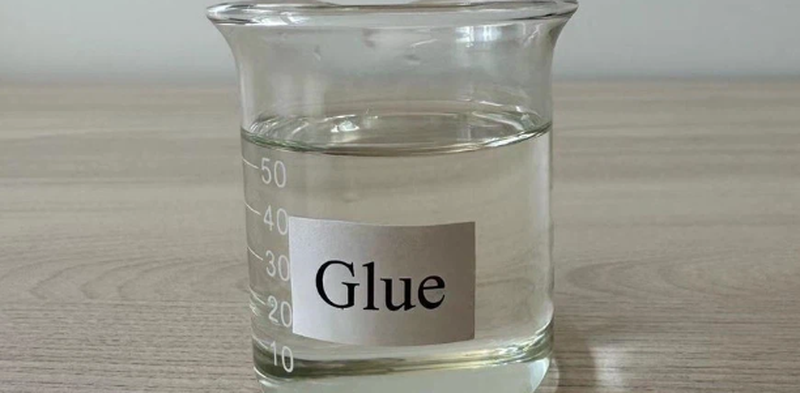
Components of Screen UV Varnish
UV Oligomer
UV coating film-forming compound is oligomer, its performance basically determines the construction performance and light curing rate of the coating before curing, the coating film performance and other special properties after curing.
Active Diluents
Active diluents are another important component of UV coatings, which can dilute and reduce viscosity, and also have the ability to adjust the performance of the cured film. The acrylate functional monomer has high reactivity and low volatility, so it is commonly used in UV coatings.
Photoinitiator
Photoinitiator is a special catalyst in UV coatings, it is an important component of UV coatings, to determine the light curing rate of UV coatings.
Additives
The role of additives is to improve the processing performance of coatings, storage performance and construction performance, improve the film performance and give the film some special features, etc. UV coatings commonly used additives are defoamer, leveling agent, wetting and dispersing agent, adhesion promoter, matting agent, resist, etc.